exhibitions
You Will Hear When You See Me
You Will Hear When You See Me
exhibition curated by Marika Kuźmicz, president of the Arton Foundation
Geta Brătescu, Jürgen Klauke, Barbara Kozłowska, Paweł Kwiek, Krzysztof Niemczyk, Edita Schubert
17.09–19.10.2024
Galerie Elisabeth & Klaus Thoman
Seilerstätte 7, Vienna, Austria
Sometimes if a story from the past needs to be told, it will find its own way to reach the present, to resonate with our here and now. But stories need to be persistently sought out, their linearity reconstructed, the paradoxes they contain heard, to find an audience, to be known, sometimes for the first time, even though years may have passed since they happened. All this time, the story may have remained silent, only to suddenly find itself, appear, be heard, change something just by having happened.
Stories have their protagonists, and to really tell their story, you must see them. Only then will the words form a narrative and resonate. Perhaps this is why the creation of self-portraits has so often become a gesture of emancipation, of making one’s presence known and telling one’s own story. This has played, and revealed, a special role in the art history of women, who for centuries were deprived of the opportunity to study in academies, so that often their own face and body was the only model available to them. Creating self-portraits was and is also a keyway for them to express their sexual identity, which could not resonate due to social restrictions.
You Will Hear When You See Me is an exhibition of self-portraits created in various Central and Eastern European countries in the 1960s and 1970s, inspired not so much by a desire for self-memory as to build and mark the artist’s place in a particular context, and through this gesture, to loosen the norms and rules that created it. By marking their presence, by documenting it, by the brute fact of recording their being, artists from this part of the world defined, built and constructed their subjectivity. In the creative process they often had to face the mechanisms of censorship, sometimes in a milder form, but sometimes they worked in the context of an extremely oppressive regime, where even the mere painting of their own image could become grounds for persecution.
Literal performative actions using both the self-portrait and the medium of painting were realized by Croatian artist Edita Schubert. Her work with the canvas consisted not only of painting it, but above all of cutting it. In some works, through the cut slits, we can see fragments of Schubert’s body, a female artist attempting to transcend not only the limits of the medium, but perhaps also the limits of the male-dominated art world.
On the other hand, Barbara Kozłowska, a Polish artist who executed her performance piece Border Line over several decades, marked and documented her presence on the beaches of the world. Behind the action was the conceptual idea of drawing a line across the entire earth, all the way to the moon, but in essence it can be read as a gesture of freedom, another challenge to an oppressive state that restricted its citizens’ ability to move freely. An additional aspect of Kozłowska’s work was her creation of different versions of her biography, which she distributed through her mail art or exhibited together with her documentation from Border Line.
Another sort of challenge to the system is Video A, a “partial” self-portrait by Paweł Kwiek, one of the first video works made in this part of Europe, created in the studio of a state TV station, where it was also broadcast in 1975. At the same time, Kwiek reveals to viewers the mechanism of image manipulation, and defines his position in relation to others and in relation to the space and the cameras recording him.
Such was the case with one of Romania’s most important artists, Geta Brătescu. Self-portraiture holds a special place in her work. Brătescu examined life under the totalitarian regime in communist Romania, posing questions of identity, self-censorship and private spheres to reflect the widespread repression and the artistic ban on deviation from official state lines.
Her work focused heavily on the contradiction between the official state artistic direction, which rejected and punished any aesthetics questioning the regime, and the haven of private studios, where artists managed to evade censorship. Brătescu explored this reality in a collage of self-portraits called Censored Self-Portrait. The artist’s face covered by collage strips drawing attention to her mouth and eyes is a silent but effective testament to the stifling political environment of communist Romania.
The creation of photographic and painterly self-portraits was the domain of the Polish artist, outsider, performer and writer Krzysztof Niemczyk, who developed an alter-ego, the female character the Courtesan referenced in the title of his novel The Courtesan and the Chicks, or a Crooked Mirror of Passionate Action, or A Study of Chaos. While he was writing the book, he painted androgynous self-portraits and applied makeup to himself for the purpose of creating photographs, which together with the oil paintings were a kind of visualization of the Courtesan. Most of the oeuvre of Niemczyk, who was persecuted among other reasons due to his sexual orientation, was destroyed by the secret police. Like the German artist Jürgen Klauke, Niemczyk challenged the explicitness of sexual orientation. With his own self-portraits, Klauke operated on the boundary of gender identity, polemicizing against the social imperative to define that identity. All these attitudes do not exhaust the possibilities of using self-portraiture on the path to personal and artistic emancipation, but they do provide a good starting point on the subject.
Self-portraiture is one of the most vital tools for exploring identity, including gender identity, and telling a story, as German artist Jürgen Klauke does. His photographic self-portraits created over several decades are a story of how fluid gender identification is. The next step in the creation of self-images is photographs of his own body taken with an X-ray machine. This self-photographic visual narrative, like the others in the exhibition, throws down the gauntlet to societies that categorize and label and have recurring and renewed problems with individuals who escape categorization and manifest their independence and subjectivity, despite their limitations.
For more information, please visit the Galerie Thoman website.
exhibition curated by Marika Kuźmicz, president of the Arton Foundation
Geta Brătescu, Jürgen Klauke, Barbara Kozłowska, Paweł Kwiek, Krzysztof Niemczyk, Edita Schubert
17.09–19.10.2024
Galerie Elisabeth & Klaus Thoman
Seilerstätte 7, Vienna, Austria
Sometimes if a story from the past needs to be told, it will find its own way to reach the present, to resonate with our here and now. But stories need to be persistently sought out, their linearity reconstructed, the paradoxes they contain heard, to find an audience, to be known, sometimes for the first time, even though years may have passed since they happened. All this time, the story may have remained silent, only to suddenly find itself, appear, be heard, change something just by having happened.
Stories have their protagonists, and to really tell their story, you must see them. Only then will the words form a narrative and resonate. Perhaps this is why the creation of self-portraits has so often become a gesture of emancipation, of making one’s presence known and telling one’s own story. This has played, and revealed, a special role in the art history of women, who for centuries were deprived of the opportunity to study in academies, so that often their own face and body was the only model available to them. Creating self-portraits was and is also a keyway for them to express their sexual identity, which could not resonate due to social restrictions.
You Will Hear When You See Me is an exhibition of self-portraits created in various Central and Eastern European countries in the 1960s and 1970s, inspired not so much by a desire for self-memory as to build and mark the artist’s place in a particular context, and through this gesture, to loosen the norms and rules that created it. By marking their presence, by documenting it, by the brute fact of recording their being, artists from this part of the world defined, built and constructed their subjectivity. In the creative process they often had to face the mechanisms of censorship, sometimes in a milder form, but sometimes they worked in the context of an extremely oppressive regime, where even the mere painting of their own image could become grounds for persecution.
Literal performative actions using both the self-portrait and the medium of painting were realized by Croatian artist Edita Schubert. Her work with the canvas consisted not only of painting it, but above all of cutting it. In some works, through the cut slits, we can see fragments of Schubert’s body, a female artist attempting to transcend not only the limits of the medium, but perhaps also the limits of the male-dominated art world.
On the other hand, Barbara Kozłowska, a Polish artist who executed her performance piece Border Line over several decades, marked and documented her presence on the beaches of the world. Behind the action was the conceptual idea of drawing a line across the entire earth, all the way to the moon, but in essence it can be read as a gesture of freedom, another challenge to an oppressive state that restricted its citizens’ ability to move freely. An additional aspect of Kozłowska’s work was her creation of different versions of her biography, which she distributed through her mail art or exhibited together with her documentation from Border Line.
Another sort of challenge to the system is Video A, a “partial” self-portrait by Paweł Kwiek, one of the first video works made in this part of Europe, created in the studio of a state TV station, where it was also broadcast in 1975. At the same time, Kwiek reveals to viewers the mechanism of image manipulation, and defines his position in relation to others and in relation to the space and the cameras recording him.
Such was the case with one of Romania’s most important artists, Geta Brătescu. Self-portraiture holds a special place in her work. Brătescu examined life under the totalitarian regime in communist Romania, posing questions of identity, self-censorship and private spheres to reflect the widespread repression and the artistic ban on deviation from official state lines.
Her work focused heavily on the contradiction between the official state artistic direction, which rejected and punished any aesthetics questioning the regime, and the haven of private studios, where artists managed to evade censorship. Brătescu explored this reality in a collage of self-portraits called Censored Self-Portrait. The artist’s face covered by collage strips drawing attention to her mouth and eyes is a silent but effective testament to the stifling political environment of communist Romania.
The creation of photographic and painterly self-portraits was the domain of the Polish artist, outsider, performer and writer Krzysztof Niemczyk, who developed an alter-ego, the female character the Courtesan referenced in the title of his novel The Courtesan and the Chicks, or a Crooked Mirror of Passionate Action, or A Study of Chaos. While he was writing the book, he painted androgynous self-portraits and applied makeup to himself for the purpose of creating photographs, which together with the oil paintings were a kind of visualization of the Courtesan. Most of the oeuvre of Niemczyk, who was persecuted among other reasons due to his sexual orientation, was destroyed by the secret police. Like the German artist Jürgen Klauke, Niemczyk challenged the explicitness of sexual orientation. With his own self-portraits, Klauke operated on the boundary of gender identity, polemicizing against the social imperative to define that identity. All these attitudes do not exhaust the possibilities of using self-portraiture on the path to personal and artistic emancipation, but they do provide a good starting point on the subject.
Self-portraiture is one of the most vital tools for exploring identity, including gender identity, and telling a story, as German artist Jürgen Klauke does. His photographic self-portraits created over several decades are a story of how fluid gender identification is. The next step in the creation of self-images is photographs of his own body taken with an X-ray machine. This self-photographic visual narrative, like the others in the exhibition, throws down the gauntlet to societies that categorize and label and have recurring and renewed problems with individuals who escape categorization and manifest their independence and subjectivity, despite their limitations.
For more information, please visit the Galerie Thoman website.
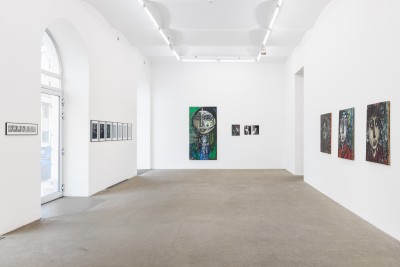
View of the exhibition „You Will Hear When You See Me”
Photo © Galerie Elisabeth & Klaus Thoman / kunst-dokumentation.com
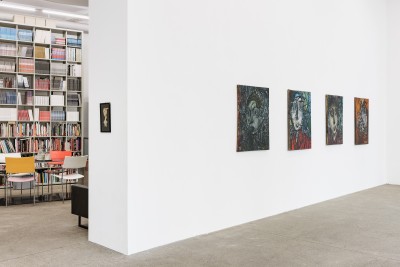
View of the exhibition „You Will Hear When You See Me”
Photo © Galerie Elisabeth & Klaus Thoman / kunst-dokumentation.com
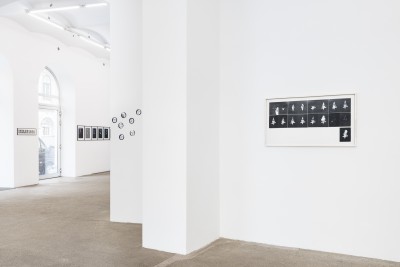
View of the exhibition „You Will Hear When You See Me”
Photo © Galerie Elisabeth & Klaus Thoman / kunst-dokumentation.com
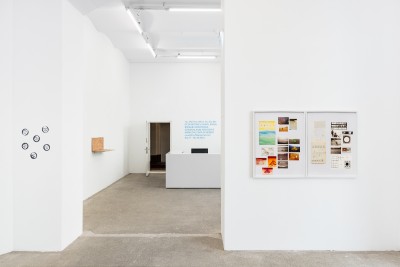
View of the exhibition „You Will Hear When You See Me”
Photo © Galerie Elisabeth & Klaus Thoman / kunst-dokumentation.com
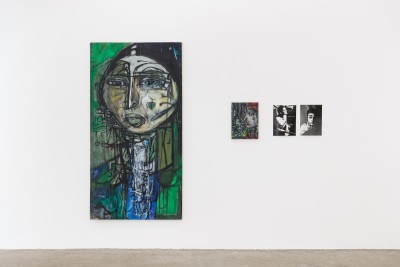
View of the exhibition „You Will Hear When You See Me”
Photo © Galerie Elisabeth & Klaus Thoman / kunst-dokumentation.com
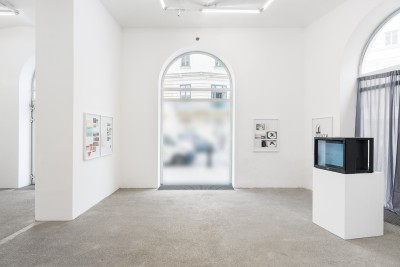
View of the exhibition „You Will Hear When You See Me”
Photo © Galerie Elisabeth & Klaus Thoman / kunst-dokumentation.com
Other exhibitions
-
 exhibitions
Natural Situations: Agnieszka Niziurska
-
 exhibitions
Parts. Zofia Glazer-Rudzińska
-
 exhibitions
Social History. 70 years of the gallery at Rynek Starego Miasta 2
-
 exhibitions
70th Anniversary of the Gallery at the Old Town Cultural Centre
-
 exhibitions
Such Was My Dream. Joanna Stańko
-
 exhibitions
Barbara Maroń. A Story Within a Story
-
 exhibitions
Applied Herstories: Irena Huml
-
 exhibitions
Grown in Love: Liliana Mikołajewska-Jansen
-
 exhibitions
Mirrors and Screens: Małgorzata Potocka, Jagoda Kaloper
-
 exhibitions
Places for Deliberation. Barbara Kozłowska
-
 exhibitions
Małgorzata Rittersschild. The Lizard Means Short-Lived Happiness
-
 exhibitions
Beyond Documentation Imaginations Emerge. Anna and Krystian Jarnuszkiewicz
-
 exhibitions
Presence. Maria Michałowska
-
 exhibitions
Argentine Experiment: CAyC and CSSR
-
 exhibitions
Jolanta Owidzka. I Wouldn’t Dare Walk on a Work of Art
-
 exhibitions
Open Jagoda Przybylak Studio
-
 exhibitions
Jagoda Przybylak: "... must see"
-
 exhibitions
Maria Michałowska: At the End of This Road I Might Find a Mirror exhibition
-
 exhibitions
Looking Into The Sun. Hanna Orzechowska
-
 exhibitions
Motifs: Krystyna Szczepanowska-Miklaszewska
-
 exhibitions
Jagoda Przybylak: “... must see”
-
 exhibitions
Ties and Threads: Herstories of Eleonora Plutyńska
-
 exhibitions
The less work, the better effect. Liliana Lewicka
-
 exhibitions
Anna Buczkowska
-
 exhibitions
Wspólny splot
-
 exhibitions
Hanna Orzechowska. W relacji / In relation
-
 exhibitions
wystawa Pawła Kwieka "Zrobić niemożliwe światło"
-
 exhibitions
Małgorzata Potocka
-
 exhibitions
P.S. Warunkiem uczestnictwa jest praca twórcza. Mikrohistorie plenerow w Osiekach
-
 exhibitions
Who is Janina Węgrzynowska?
-
 exhibitions
Anna Ciba: When You Look Into My Eyes, What Do You See?
-
 exhibitions
Małgorzata Potocka. We Don’t Need Other Words When We Have Mirrors
-
 exhibitions
Zdzisław Jurkiewicz. Sun in the Kitchen
-
 exhibitions
CLICK. Sexualisation of Food in Art
-
 exhibitions
Andrij Bojarov / Андрій Бояров: Koło i kula / Коло і куля
-
 exhibitions
Tapta
-
 exhibitions
Sisters: Alicja & Bożena Wahl
-
 exhibitions
Zdzisław Jurkiewicz. Occurrences
-
 exhibitions
Three Things I Love in Life: the Car, Liquor, and Sailors
-
 exhibitions
Phony Smile. Language of Aesthetic Speculation in Croatian Photography
-
 exhibitions
Exhibition Laboratory of Presentation Techniques
-
 exhibitions
Barbara Kozłowska. Linia
-
 exhibitions
Barbara Kozłowska. You Can See It All Anywhere
-
 exhibitions
Soft shooting? Introducing the History of Women’s Photography in Croatia
-
 exhibitions
Out in the Fresh Air? Early Ecological Projects during Artistic Plein-Airs in Poland
-
 exhibitions
At The Worlds Table. Zdzisław Jurkiewicz
-
 exhibitions
The Case of Jadwiga S.
-
 exhibitions
IN. Ludmiła Popiel i Jerzy Fedorowicz
-
 exhibitions
Womens Art, Iwona Lemke-Konart
-
 exhibitions
Paweł Kwiek. Time Difference
-
 exhibitions
Formy nikłe. Ludmiła Popiel & Jerzy Fedorowicz
-
 exhibitions
Nie mów, że urodziłeś się w złym czasie
-
 exhibitions
1: 11 Microstories
-
 exhibitions
I lay and fly away
-
 exhibitions
Wystawa Jolanty Marcolli w BWA Zielona Góra
-
 exhibitions
Ja to ktoś inny / Bruce Nauman / Krzysztof Niemczyk
-
 exhibitions
Video Killed The TV Star
-
 exhibitions
If you dont know me by now, you will never never never know me
-
 exhibitions
Arton Review Europe - exhibition and film screening
-
 exhibitions
Ludmiła Popiel
-
 exhibitions
Doing the Impossible Light
-
 exhibitions
Jolanta Marcolla. A Room of One’s Own
-
 exhibitions
across realities Wojciech Bruszewski / Mateusz Sadowski
-
 exhibitions
Andrzej Jórczak. Looking at Alpha Ursae
-
 exhibitions
6 meters before Paris - Eustachy Kossakowski
-
 exhibitions
Polska Fotografia Konceptualna
-
 exhibitions
Conceptualism. Photographic medium.
-
 exhibitions
Barbara Kozłowska Wszystko to możesz zobaczyć gdziekolwiek
-
 exhibitions
Zdarzenia. Zdzisław Jurkiewicz