exhibitions
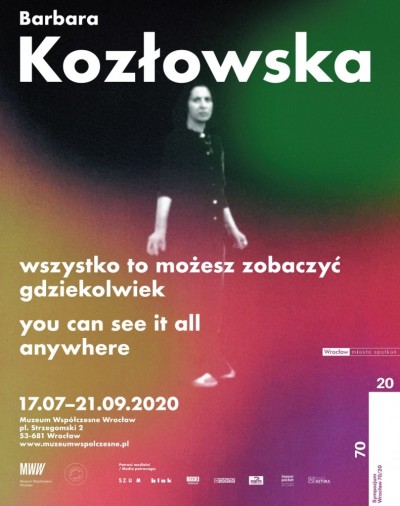
Barbara Kozłowska. You Can See It All Anywhere
BARBARA KOZŁOWSKA. YOU CAN SEE IT ALL ANYWHERE
Opening:17.07.2020, MWW, Srzegomski Square 2 a, Wrocław
Exhibition: 17.7.20–21.9.20
Curator: Marika Kuźmicz
The exhibition is part of the Wrocław 70/20 Symposium [Sympozjum Wrocław 70/20] – a grassroots programme celebrating the 50th anniversary of the Wrocław ’70 Visual Arts Symposium.
“i was born in poland i exhibited a lot and always where i did not want to exhibit where i wanted to exhibit I did not exhibit i travelled i performed i went where i wanted to go for important artistic reasons i travelled with all available means of transport as far as possible i appeared on beaches in galleries and on video i built i moved i repeated things i built theoretical models of concepts i moved the borderline to the moon and everywhere i always repeated the same banal sentences about art and reality or the same banal truth about art i wrote obvious things about things i took part in exhibitions in poland romania great britain italy yugoslavia i travelled to siberia to great britain to malta to italy yugoslavia france”
These are the words of Barbara Kozłowska (1940–2008) about herself. This form of autobiography, as a peculiar text-object, often accompanied her exhibitions. It refers to matters that she found most important: movement, travel, exploration of space and the study of “ordinary” reality that invariably occupies it, which she summed up with the following key sentence that also describes her work: “You can see it all anywhere.” Kozłowska wrote a lot about her work, but only a small part of these texts was published. “Known and unknown” – this is how Kozłowska was described in 2016 by Zbigniew Makarewicz [1], who was her husband and co-creator of some of her works.
Since the early 1960s, Kozłowska actively co-created the Wrocław avant-garde milieu. Her multimedia works, especially precursory performances or “events”, as she termed them, demonstrated her unusually original attitude against the background of what was happening in Polish art, not only in the 1960s and 1970s. Yet for a long time Kozłowska remained an “unknown” artist, to quote Makarewicz’s words. No texts or monographs about her oeuvre have been published.
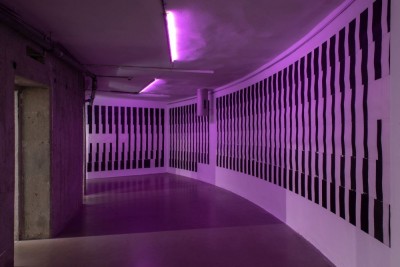
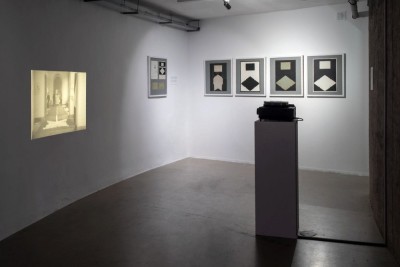
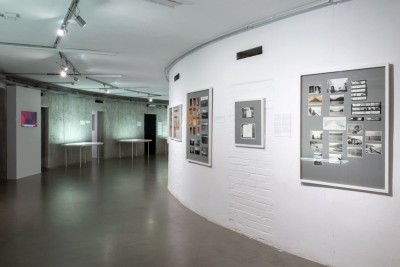
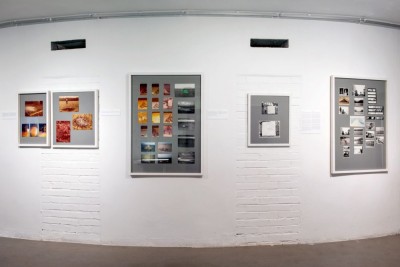
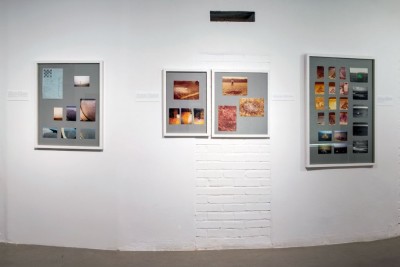
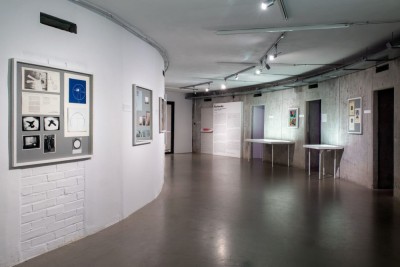
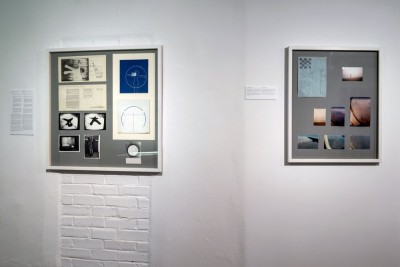
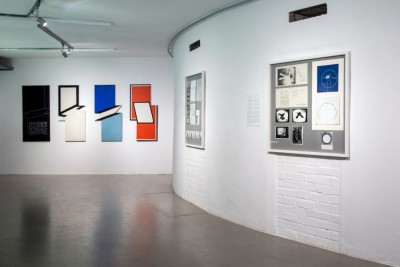
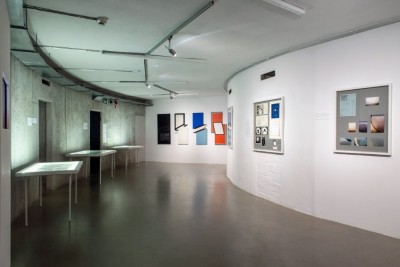
Given the absence of studies on Kozłowska’s art, it is her private archive that proves to be the most valuable source of information. It also constitutes the basis for this exhibition at Wrocław Contemporary Museum. Working with an artist’s archive is always an excellent source of information about their work, but in the case of Barbara Kozłowska, it is particularly important – not only because it constitutes the main source material, but also because its structure perfectly reflects the uniqueness of her method of work and her way of thinking. The archive consists of short notes, manuscripts, typescripts, old invitations to exhibitions adorned with handwritten comments, correspondence, shopping lists on which I also found ideas for work titles, notes about her own health, exhibition designs, future plans for the Babel Gallery and numerous autobiographies in various versions.
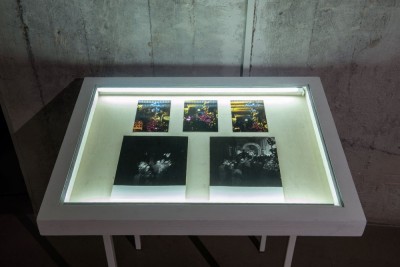
The archive includes works of art, elements that are clearly connected with works and those seemingly unimportant, which does not mean that they will not actually turn out to be the opposite – the subsequent words, drawings, charts and sentences add to the sense of the works, which in Kozłowska’s case were not the culmination of the creative process, but its manifestation. Theoretically, this can be said of many artists, but in the case of Barbara Kozłowska it was particularly important. After the emergence of a work, usually in an ephemeral form, the artist would return to it, having enriched her knowledge by reading, writing and conducting a kind of dialogue with herself, in order to manifest the next stage of her creative process after some time. This is how she described the Borderline: “The Borderline is a work in process. What follows from this is that it will never be a work that could be unambiguously described as a finished whole. It does not matter which part of the work we present to the viewer, it will still result in a lack of clarity rather than full contact with the work. Documents, fragments of actions, photos or slides can only hint at this journey of the work in time. Some barely perceptible pieces, unpredictable points at which these pieces become works of art.”
To manifest her concepts, Kozłowska typically used highly reduced means of expression, gestures that were not so much intended to create a new entity (a work of art), but rather to draw attention to certain phenomena existing in nature, to highlight a feature of the universe or reality. She retrospectively described some of her works as “events” – their structure was constituted on “presence with minimal intervention.” At the same time, these small gestures were clearly connected with Kozłowska’s need to exist as a subject in relation to time and space. Her own subjectivity was a source of constant reflection. However, it was not egocentric in character, but based on the realisation of various complex relationships. The need to determine the position of the self in relation to the world is an important feature of Kozłowska’s art.
Kozłowska’s archive in its entirety is also a record of the artist’s peculiar, long-lasting dialogue with herself. There is something poignant about the multiple versions of her biography, texts, self-commentaries, elaborations of works, especially in the face of researchers’ silence about her art. It seems to be an attempt to overcome her loneliness as an artist, which she must have experienced despite living in a relationship with another artist. Kozłowska shared the fate of many female artists who have never become part of the canon, of which she was well aware. In her case, however, it can be rectified – with the archive as a source of works, but also, equally importantly, as a source of the narrative.
Organizer: Contemporary Museum (MWW), Wrocław
Co-organizer: Fundacja Arton
Visual identification: Katarzyna Listwan / Wzgórze Paproć
Opening:17.07.2020, MWW, Srzegomski Square 2 a, Wrocław
Exhibition: 17.7.20–21.9.20
Curator: Marika Kuźmicz
The exhibition is part of the Wrocław 70/20 Symposium [Sympozjum Wrocław 70/20] – a grassroots programme celebrating the 50th anniversary of the Wrocław ’70 Visual Arts Symposium.
“i was born in poland i exhibited a lot and always where i did not want to exhibit where i wanted to exhibit I did not exhibit i travelled i performed i went where i wanted to go for important artistic reasons i travelled with all available means of transport as far as possible i appeared on beaches in galleries and on video i built i moved i repeated things i built theoretical models of concepts i moved the borderline to the moon and everywhere i always repeated the same banal sentences about art and reality or the same banal truth about art i wrote obvious things about things i took part in exhibitions in poland romania great britain italy yugoslavia i travelled to siberia to great britain to malta to italy yugoslavia france”
These are the words of Barbara Kozłowska (1940–2008) about herself. This form of autobiography, as a peculiar text-object, often accompanied her exhibitions. It refers to matters that she found most important: movement, travel, exploration of space and the study of “ordinary” reality that invariably occupies it, which she summed up with the following key sentence that also describes her work: “You can see it all anywhere.” Kozłowska wrote a lot about her work, but only a small part of these texts was published. “Known and unknown” – this is how Kozłowska was described in 2016 by Zbigniew Makarewicz [1], who was her husband and co-creator of some of her works.
Since the early 1960s, Kozłowska actively co-created the Wrocław avant-garde milieu. Her multimedia works, especially precursory performances or “events”, as she termed them, demonstrated her unusually original attitude against the background of what was happening in Polish art, not only in the 1960s and 1970s. Yet for a long time Kozłowska remained an “unknown” artist, to quote Makarewicz’s words. No texts or monographs about her oeuvre have been published.
Given the absence of studies on Kozłowska’s art, it is her private archive that proves to be the most valuable source of information. It also constitutes the basis for this exhibition at Wrocław Contemporary Museum. Working with an artist’s archive is always an excellent source of information about their work, but in the case of Barbara Kozłowska, it is particularly important – not only because it constitutes the main source material, but also because its structure perfectly reflects the uniqueness of her method of work and her way of thinking. The archive consists of short notes, manuscripts, typescripts, old invitations to exhibitions adorned with handwritten comments, correspondence, shopping lists on which I also found ideas for work titles, notes about her own health, exhibition designs, future plans for the Babel Gallery and numerous autobiographies in various versions.
The archive includes works of art, elements that are clearly connected with works and those seemingly unimportant, which does not mean that they will not actually turn out to be the opposite – the subsequent words, drawings, charts and sentences add to the sense of the works, which in Kozłowska’s case were not the culmination of the creative process, but its manifestation. Theoretically, this can be said of many artists, but in the case of Barbara Kozłowska it was particularly important. After the emergence of a work, usually in an ephemeral form, the artist would return to it, having enriched her knowledge by reading, writing and conducting a kind of dialogue with herself, in order to manifest the next stage of her creative process after some time. This is how she described the Borderline: “The Borderline is a work in process. What follows from this is that it will never be a work that could be unambiguously described as a finished whole. It does not matter which part of the work we present to the viewer, it will still result in a lack of clarity rather than full contact with the work. Documents, fragments of actions, photos or slides can only hint at this journey of the work in time. Some barely perceptible pieces, unpredictable points at which these pieces become works of art.”
To manifest her concepts, Kozłowska typically used highly reduced means of expression, gestures that were not so much intended to create a new entity (a work of art), but rather to draw attention to certain phenomena existing in nature, to highlight a feature of the universe or reality. She retrospectively described some of her works as “events” – their structure was constituted on “presence with minimal intervention.” At the same time, these small gestures were clearly connected with Kozłowska’s need to exist as a subject in relation to time and space. Her own subjectivity was a source of constant reflection. However, it was not egocentric in character, but based on the realisation of various complex relationships. The need to determine the position of the self in relation to the world is an important feature of Kozłowska’s art.
Kozłowska’s archive in its entirety is also a record of the artist’s peculiar, long-lasting dialogue with herself. There is something poignant about the multiple versions of her biography, texts, self-commentaries, elaborations of works, especially in the face of researchers’ silence about her art. It seems to be an attempt to overcome her loneliness as an artist, which she must have experienced despite living in a relationship with another artist. Kozłowska shared the fate of many female artists who have never become part of the canon, of which she was well aware. In her case, however, it can be rectified – with the archive as a source of works, but also, equally importantly, as a source of the narrative.
Organizer: Contemporary Museum (MWW), Wrocław
Co-organizer: Fundacja Arton
Visual identification: Katarzyna Listwan / Wzgórze Paproć
Other exhibitions
-
 exhibitions
Natural Situations: Agnieszka Niziurska
-
 exhibitions
Parts. Zofia Glazer-Rudzińska
-
 exhibitions
Social History. 70 years of the gallery at Rynek Starego Miasta 2
-
 exhibitions
70th Anniversary of the Gallery at the Old Town Cultural Centre
-
 exhibitions
Such Was My Dream. Joanna Stańko
-
 exhibitions
Barbara Maroń. A Story Within a Story
-
 exhibitions
Applied Herstories: Irena Huml
-
 exhibitions
Grown in Love: Liliana Mikołajewska-Jansen
-
 exhibitions
Mirrors and Screens: Małgorzata Potocka, Jagoda Kaloper
-
 exhibitions
Places for Deliberation. Barbara Kozłowska
-
 exhibitions
Małgorzata Rittersschild. The Lizard Means Short-Lived Happiness
-
 exhibitions
Beyond Documentation Imaginations Emerge. Anna and Krystian Jarnuszkiewicz
-
 exhibitions
Presence. Maria Michałowska
-
 exhibitions
Argentine Experiment: CAyC and CSSR
-
 exhibitions
Jolanta Owidzka. I Wouldn’t Dare Walk on a Work of Art
-
 exhibitions
Open Jagoda Przybylak Studio
-
 exhibitions
Jagoda Przybylak: "... must see"
-
 exhibitions
Maria Michałowska: At the End of This Road I Might Find a Mirror exhibition
-
 exhibitions
Looking Into The Sun. Hanna Orzechowska
-
 exhibitions
Motifs: Krystyna Szczepanowska-Miklaszewska
-
 exhibitions
You Will Hear When You See Me
-
 exhibitions
Jagoda Przybylak: “... must see”
-
 exhibitions
Ties and Threads: Herstories of Eleonora Plutyńska
-
 exhibitions
The less work, the better effect. Liliana Lewicka
-
 exhibitions
Anna Buczkowska
-
 exhibitions
Wspólny splot
-
 exhibitions
Hanna Orzechowska. W relacji / In relation
-
 exhibitions
wystawa Pawła Kwieka "Zrobić niemożliwe światło"
-
 exhibitions
Małgorzata Potocka
-
 exhibitions
P.S. Warunkiem uczestnictwa jest praca twórcza. Mikrohistorie plenerow w Osiekach
-
 exhibitions
Who is Janina Węgrzynowska?
-
 exhibitions
Anna Ciba: When You Look Into My Eyes, What Do You See?
-
 exhibitions
Małgorzata Potocka. We Don’t Need Other Words When We Have Mirrors
-
 exhibitions
Zdzisław Jurkiewicz. Sun in the Kitchen
-
 exhibitions
CLICK. Sexualisation of Food in Art
-
 exhibitions
Andrij Bojarov / Андрій Бояров: Koło i kula / Коло і куля
-
 exhibitions
Tapta
-
 exhibitions
Sisters: Alicja & Bożena Wahl
-
 exhibitions
Zdzisław Jurkiewicz. Occurrences
-
 exhibitions
Three Things I Love in Life: the Car, Liquor, and Sailors
-
 exhibitions
Phony Smile. Language of Aesthetic Speculation in Croatian Photography
-
 exhibitions
Exhibition Laboratory of Presentation Techniques
-
 exhibitions
Barbara Kozłowska. Linia
-
 exhibitions
Soft shooting? Introducing the History of Women’s Photography in Croatia
-
 exhibitions
Out in the Fresh Air? Early Ecological Projects during Artistic Plein-Airs in Poland
-
 exhibitions
At The Worlds Table. Zdzisław Jurkiewicz
-
 exhibitions
The Case of Jadwiga S.
-
 exhibitions
IN. Ludmiła Popiel i Jerzy Fedorowicz
-
 exhibitions
Womens Art, Iwona Lemke-Konart
-
 exhibitions
Paweł Kwiek. Time Difference
-
 exhibitions
Formy nikłe. Ludmiła Popiel & Jerzy Fedorowicz
-
 exhibitions
Nie mów, że urodziłeś się w złym czasie
-
 exhibitions
1: 11 Microstories
-
 exhibitions
I lay and fly away
-
 exhibitions
Wystawa Jolanty Marcolli w BWA Zielona Góra
-
 exhibitions
Ja to ktoś inny / Bruce Nauman / Krzysztof Niemczyk
-
 exhibitions
Video Killed The TV Star
-
 exhibitions
If you dont know me by now, you will never never never know me
-
 exhibitions
Arton Review Europe - exhibition and film screening
-
 exhibitions
Ludmiła Popiel
-
 exhibitions
Doing the Impossible Light
-
 exhibitions
Jolanta Marcolla. A Room of One’s Own
-
 exhibitions
across realities Wojciech Bruszewski / Mateusz Sadowski
-
 exhibitions
Andrzej Jórczak. Looking at Alpha Ursae
-
 exhibitions
6 meters before Paris - Eustachy Kossakowski
-
 exhibitions
Polska Fotografia Konceptualna
-
 exhibitions
Conceptualism. Photographic medium.
-
 exhibitions
Barbara Kozłowska Wszystko to możesz zobaczyć gdziekolwiek
-
 exhibitions
Zdarzenia. Zdzisław Jurkiewicz